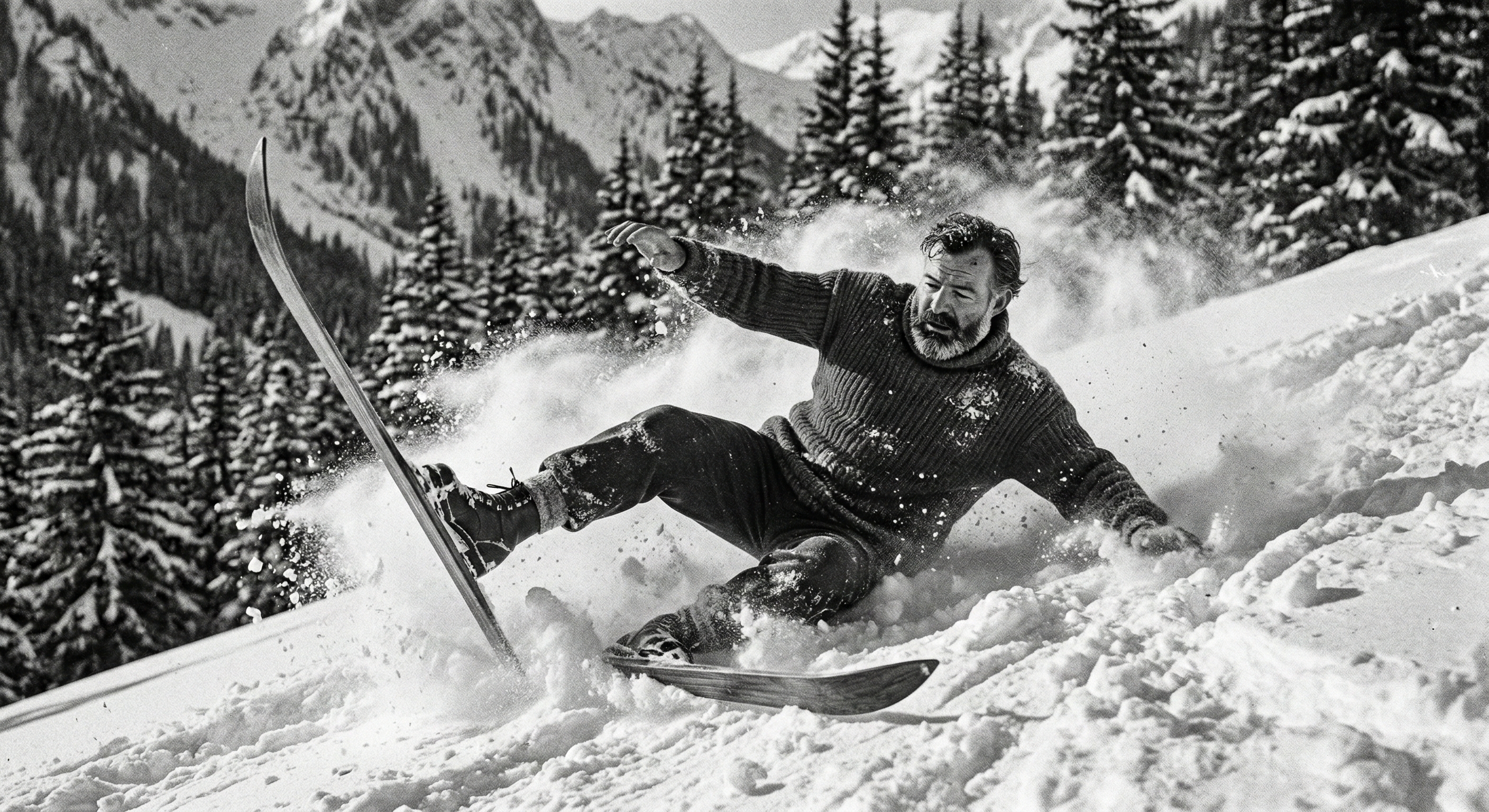
It should be noted, for the record, that Ernest Hemingway was not a particularly good skier. He was enthusiastic, which is a different and considerably more dangerous thing. He skied in Schruns in 1925, wrote about it in A Moveable Feast with the kind of muscular sentimentality that made him famous, and subsequently fell over a great deal in various other Alpine locations throughout the 1930s.
He was, by all accounts, tremendous company on the mountain and a liability on anything steeper than an intermediate blue.
The Society named the glade after him anyway, on the grounds that the run rewards a certain temperament over a certain technique. It is not especially steep. It is not especially groomed. It winds through old larch at a pace that requires patience, and patience, as any editor will tell you, is the thing Hemingway was always working on.
The trees create a corridor of quiet that is, we are told by members who feel things, “like being inside a very good paragraph.”
To ski the Hemingway Glade correctly, one should enter from the ridge at approximately eleven in the morning, after the fresh tracks from the first chair lunatics have settled and before the afternoon light flattens everything interesting. The trees create a corridor of quiet that is, we are told by members who feel things, “like being inside a very good paragraph.” We include this observation without comment.
The glade deposits you onto the lower meadow slightly breathless, slightly improved, and with a reasonable appetite for lunch. This was, we suspect, Hemingway's preferred condition generally.
A word of guidance: members who enter the Hemingway Glade talking tend to exit it somewhat differently. The trees have a way of making conversation feel beside the point. This is not a warning. It is simply information.
The glade is not marked on the resort map. It does not need to be. If you know, you know. If you don't, the main run is perfectly pleasant.